The MSME Lending Playbook 2030: Building the Next Decade of Credit Growth
India’s MSME sector stands at a structural inflection point. As credit penetration deepens and digital infrastructure strengthens, the conversation is no longer about whether MSME lending will grow but how it will grow sustainably.
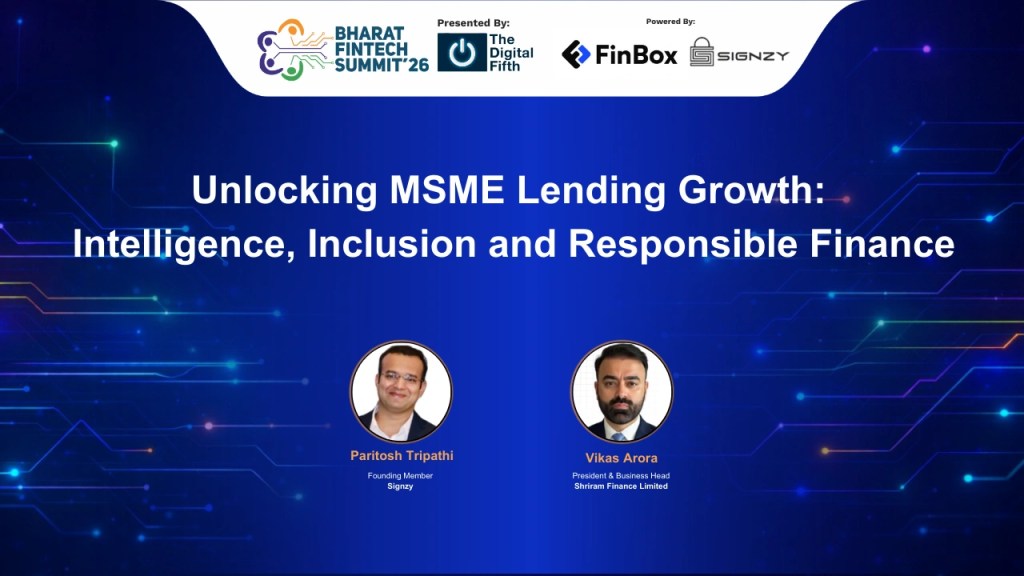
At the Bharat Fintech Summit, leaders from Equifax, Northern Arc Capital, Suryoday Small Finance Bank, and Ebitus explored what the MSME lending playbook will look like by 2030.
The consensus was clear: scale is inevitable, but discipline will define success.
- The Real Opportunity Lies Beneath the Surface
India has millions of MSMEs, yet a significant portion especially in the micro and informal segment remains underserved by formal finance.
Urban, prime MSME borrowers are already competitive markets. The real expansion opportunity lies deeper: small, thin-file enterprises in semi-urban and rural India that require structured access to working capital and growth financing.
The challenge is not demand. It is underwriting confidence.
Bridging this gap will require lenders to move beyond traditional metrics and adopt more dynamic credit assessment frameworks.
- Access Over Pricing
One of the strongest themes emerging from the discussion was that for small businesses, certainty matters more than marginal pricing differences.
Entrepreneurs value:
- Speed of approval
- Clarity of eligibility
- Predictable credit limits
- Minimal documentation friction
In this segment, trust is built through responsiveness. Faster turnaround times and transparent decisioning frameworks often outweigh small variations in interest rates.
The competitive advantage, therefore, lies in operational efficiency.
- From Microfinance to Structured Micro Banking
The lending model itself is evolving.
Traditional group-based microfinance structures are gradually giving way to individualised underwriting. The long-term objective is borrower graduation enabling small enterprises to transition from basic credit access to formal business banking relationships.
This shift reflects a broader ambition: not just funding cycles, but enabling enterprise growth.
Graduation becomes the true measure of portfolio quality.
- Data as the New Collateral
Credit evaluation in the next decade will increasingly rely on layered data intelligence.
Beyond bureau records, lenders are leveraging:
- GST filings
- UPI transaction trails
- Bank statement analytics
- Account Aggregator data
- Real-time cash flow insights
Recent transaction behaviour is often more predictive than historical financial statements. However, digital underwriting must be complemented with contextual understanding – particularly in informal markets where business realities may not be fully captured in structured datasets.
Technology enhances visibility. It does not eliminate the need for judgment.
- Responsible Growth as a Strategic Imperative
As small-ticket unsecured lending expands, risk management must evolve in parallel.
Portfolio monitoring, faster bureau refresh cycles, early warning triggers, and disciplined exposure management are becoming non-negotiable.
The industry has learned that aggressive expansion without governance creates systemic stress. Sustainable growth requires balance between innovation and prudence, speed and stability.
The Road to 2030
MSME lending in 2030 will be defined by:
- Intelligent underwriting
- Blended digital and physical engagement
- Lifecycle-based borrower management
- Embedded risk monitoring
- Long-term relationship orientation
The institutions that succeed will not simply disburse more loans. They will build scalable, data-driven, and resilient credit ecosystems.
India’s MSME opportunity is vast. The next decade will belong to lenders who pair ambition with architecture and growth with governance.