Building the Credit Engine of the Future: Tech, Trust, and Transformation for NBFCs
India’s next trillion in credit growth will not be powered by capital alone, it will be powered by architecture, intelligence, and trust.
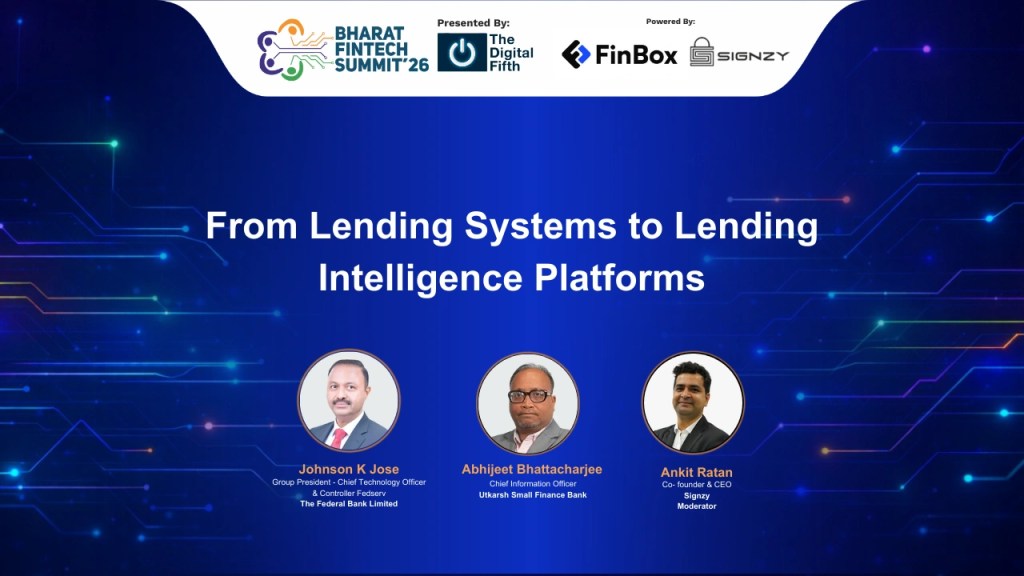
At the Bharat Fintech Summit, this theme came alive through a compelling discussion featuring leaders across lending, infrastructure, analytics, and rural finance. Moderated by Srijan (Co-founder, FinBox), the panel brought together:
- Sanjay Hinduja, MD & CEO, Shapoorji Pallonji Finance
- Ashish Gupta, Chief Transformation & Analytics Officer, Auxilo Finserve
- Ramaswamy Subramanian, Deputy CEO, Dvara KGFS
- Jagdish Narayan, CTO, Equifax India
The conversation moved beyond surface-level digitization and into the deeper question: what does it take to build a resilient, future-ready credit engine?
- From Monoliths to Connected Ecosystems
Lending architecture has evolved dramatically.
Where institutions once operated monolithic systems sourcing, underwriting, LMS, and collections bundled together today’s model is modular. Embedded finance, new sourcing channels, alternate data streams, and real-time decisioning have fragmented the stack.
The next step is intelligent reconnection.
NBFCs must move from siloed systems to interoperable ecosystems where data flows seamlessly across origination, underwriting, monitoring, and collections. Connectivity is no longer a technology upgrade — it is a structural necessity.
- Governance Before Growth
A recurring theme across the discussion was alignment.
Collaboration in ecosystem lending especially in co-lending models demands strict alignment on governance, compliance, reporting standards, and credit philosophy. Without shared interpretation of regulatory frameworks and consistent data reporting, trust gaps emerge quickly.
Technology can accelerate decisions.
But governance determines sustainability.
As AI adoption grows, so does the importance of structured oversight. Data usage, model transparency, third-party risk management, and explainability must be embedded into the architecture — not layered on later.
In large-ticket institutional lending, for example, early warning systems extend beyond checklist monitoring. Continuous data tracking, shareholder intelligence, regulatory watchlists, and behavior signals are integrated into live monitoring engines. Automation shortens turnaround time, but human judgment remains central in final credit decisions.
- Designing Flexible Digital Nuclei
Mid-sized NBFCs are increasingly building what can be described as a “digital nucleus” — a unified layer that integrates technology, data, AI, and process design under one governance umbrella.
The key insight: future-proofing is less about the current tech stack and more about architectural flexibility.
In education lending, for instance, real-time verification of tuition data through public digital infrastructure has replaced static database maintenance. Regulatory compliance, end-use validation, and fraud prevention are being strengthened through dynamic integrations rather than manual controls.
Flexibility ensures that when technologies evolve from APIs to newer AI frameworks the institution can adapt without structural breakdown.
- Rural Finance: Digital Hygiene, Human Context
In rural and semi-urban lending, digitization is no longer optional; it is hygiene.
Yet full DIY digital journeys are not always practical. Assisted models remain essential, particularly in income assessment and intent validation where formal financial records may be limited.
What is emerging instead is a hybrid architecture:
- App-based digital origination
- API-driven KYC, bureau, and account aggregator integrations
- Proprietary scoring models blending structured and household-level data
- AI-assisted underwriting pilots
- Voice bots for collections and pre-approved offers
Data depth in rural finance is expanding. Household-level financial mapping, geography-specific underwriting policies, and behavioral portfolio analysis are increasingly AI-enhanced.
The result is not just inclusion, it is precision inclusion.
- The Evolving Role of Credit Bureaus
Credit bureaus are no longer passive repositories.
As explained by leadership at Equifax India, real-time data flow is now critical particularly in use cases like BNPL and small-ticket lending where decisions must occur within seconds.
The bureau’s role extends to:
- Real-time credit behavior updates
- Propensity and collection scoring
- Cross-institutional data enrichment
- System-wide trust reinforcement
However, with scoring power comes systemic responsibility. Model governance, testing rigor, and regulatory compliance must remain uncompromised.
Trust rails are built on data accuracy, freshness, and transparency.
- AI: Accelerator, Not Replacement
Across segments large corporate supply chain finance, education lending, rural MSME lending AI is deeply embedded.
Use cases include:
- Early warning systems
- Pattern detection in unstructured documents
- Fraud prevention
- Voice-based collections
- Portfolio segmentation
- Automated policy routing
Yet a consistent message emerged: AI enhances judgment; it does not replace it.
In high-value lending especially, promoter meetings, factory visits, and qualitative assessments remain indispensable. The credit engine of the future will be AI-assisted but human-accountable.
- DPI and Infrastructure-Led Trust
India’s Digital Public Infrastructure is emerging as a foundational enabler.
From DigiLocker-based academic verification to account aggregator frameworks and UPI penetration in rural markets, public rails are reducing friction and strengthening compliance.
NBFCs that design around DPI rather than duplicating infrastructure will scale faster and with greater regulatory confidence.
- Building for the Next Trillion
The path to India’s next trillion dollars in credit expansion requires:
- Modular but connected technology architecture
- Real-time data interoperability
- Embedded governance and compliance
- AI-driven but explainable underwriting
- Human-in-the-loop oversight
- Deep contextual understanding across segments
Efficiency alone will not define success.
Resilience will. Trust will. Architectural discipline will.
NBFCs that build credit engines combining technology depth, governance strength, and customer-centric design will not only compete effectively, they will define the next phase of India’s lending evolution.